How to Start Potty Training: Methods and Expert Tips

You've noticed the signs and it looks like they're good to go. Now it's time to choose your potty training battle plan. We weighed up some of the different approaches to help you decide what's best for you.
Watch our 'How to start potty training' video with Janine, a childcare specialist with plenty of experience working with nursery-age children. She shares handy tips for your potty training journey, which usually starts around age 2. Don't worry if you're past the two-year mark and not ready yet, every child is different.
Potty training approaches for when it's time to go
The most popular potty training tips combine elements of parental prompting alongside following your child's lead. Where they vary most is in how long they take, from those that claim to get the job done in a matter of days, to approaches that may take a few months.
1. Trying the cold turkey approach
Methods that claim to potty train children in a few days or over a weekend tend to be the strictest and most intense. Have a quick search and you'll find any number of books that promise results in three days or less. This type of approach is sometimes called the bootcamp method or 'going cold turkey'. The advantage is getting the whole thing out of the way quickly, short-term pain for long-term gain.
The drawbacks of the cold turkey approach
The disadvantages? Staying in with your child for several days, monitoring them, mopping up the inevitable accidents and sticking to a schedule of putting them on the potty every 15 minutes is unrealistic for most of us. The intense nature of such an approach doesn't always go down well with your child, and there's no two ways about it, it's messy.
2. Encourage potty training by going with the flow
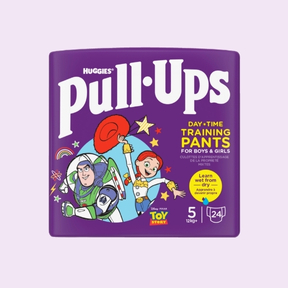
Of course, there are more staggered approaches. The NHS advocates a softly-softly approach and advises taking a break if potty training is not going well. This way involves getting your child used to the potty and makes use of Huggies® Pull-Ups Training Pants® to bridge the gap between nappies and real underwear.
3. Make potty training fun
When it comes to starting potty training, games, books, rewards (the NHS recommends stickers or small tokens rather than sweets), and plenty of encouragement will get your toddler into the potty mindset. There's more emphasis on making the process fun, allowing for bumps on the road and accepting that it may take weeks or months.
Potty training tips and advice
With your trusty method in hand, here's what else you need to know when starting potty training.
| Tip | Why it helps |
| Make sure everyone is on the same page | "Make sure any other parents, relatives and childcare professionals who take care of your child are up to speed with your potty-training action plan." - Jeni Sutton, Senior Manager at Kids Inc Nurseries. |
| Get organised | "Be prepared. Before you start, get everything in place with all the potty training kit you need." - Julia Perry, childcare professional. |
| Make sure there are no surprises | Talk to your child about going to the loo and show them the potty and toilet. Expert Alison Jandu suggests counting down the days on a calendar: "This helps ease your little one into the idea and allows time for you to build her confidence and empowerment." |
| Stick with the tried, tested, trusted | Health visitors and childcare professionals are often founts of knowledge about potty training, having seen many children through this milestone. If you need reassurance, find one and talk to them. |
| Try not to lose your temper | The more patient you can be, the better. "The calmer I was, the easier my son found it. His favourite part was when I would dance and sing the words to 'All In The Potty'. But it worked." - Lydia, mum to Alfie. |
| Don't feel bad about taking a break | Huggies® research found 42% of parents have taken a break after starting. There's no shame in stopping and reintroducing potty training, or trying different approaches to see what works. |
| Use what's out there | There are plenty of resources and books. ERIC, the children's bowel and bladder charity, and The Institute of Health Visiting both offer professional advice and resources. |

The science behind potty training
The science bit worth knowing is that the vast majority of children are not actually physically able to control their sphincter and bowels before 18 months. That's why trying any earlier is not generally advised.
Erik Erickson's theory of child development outlines the importance of creating a perfect balance between safety and autonomy in potty training. So, just like stabilisers when we're learning to ride a bike, your child needs to feel independent, but safely. This was front of mind in the design of Huggies® Pull-Ups®: all the safety they need as they learn, but with the sense of independence that comes from the 'feel wet' layer and the ability to pull their pants up and down themselves.
Trust Huggies® to make potty training a breeze
We know a few things about keeping dry, so when the time comes to introduce potty training and start a new adventure, trust us to help you potty train like a pro. From working out if they're ready to start potty training, to continuing lessons while away on holiday. If it's about potty training, we've got it covered.
Get more tips and advice straight to your inbox

Explore the Pull-Ups® range