Newborn Baby Acne: Causes, Treatment and Care Tips
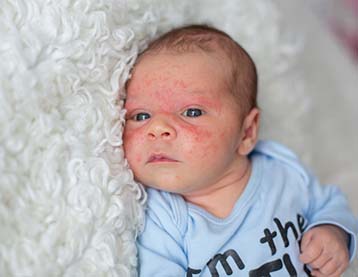
Some newborns develop spots on their face in the early weeks, known as baby acne. Sally J Hall discusses this common skin condition with paediatric dermatologist Dr Tim Clayton MB CHB MRCPCH FRCP(Edin) of DermExpert.
What is baby acne?
Babies can get spots too, and this is perfectly normal for newborns. The spots usually clear up quickly without much intervention.
"Some babies develop spots, pimples, or bumps on their face during their first few weeks. This is called baby acne or neonatal acne and usually, this is nothing to worry about. Acne can appear on any part of the face or body, though it is usually found just on the nose, cheeks, and forehead."
- Dr Tim Clayton, Paediatric Dermatologist
As a paediatric dermatologist, I know that any little spot or blemish can be worrying for new parents. My advice would be to understand what's normal, what you need to look out for and when you might need to seek out more help.
What causes baby acne?
Babies are born with very sensitive, still-developing skin. While the exact cause is not known, the hormones flowing around your body during pregnancy are likely to blame. In a way it is like teenage acne.
- Pregnancy hormones can stimulate the oil-producing glands in your baby's face.
- Your baby's pores may become blocked by dead skin cells or dirt, which can make the problem worse.
When does baby acne start?
These hormones usually start to cause problems from the second or third week of your baby's life and may continue up to around their 12th week.
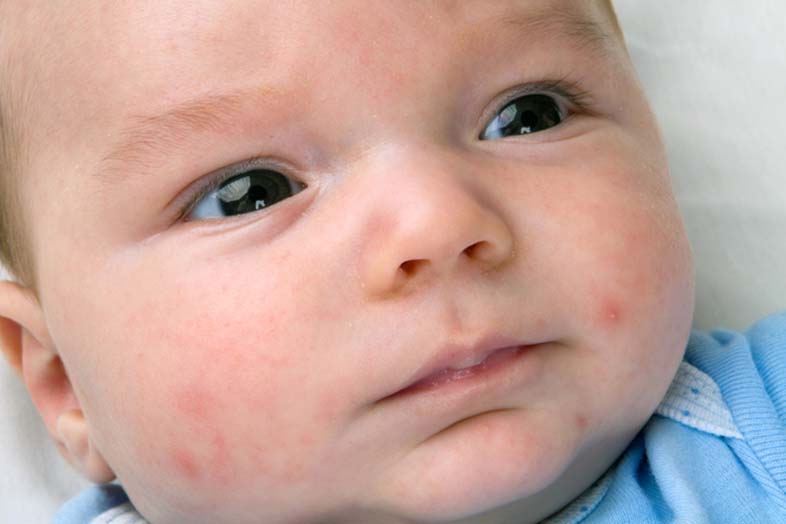
What does baby acne look like?
- Small red spots, raised bumps or what looks like a rash on the skin.
- Spots may be surrounded by clear skin, or grouped together on a redder patch of skin.
- Some spots may appear redder or angrier than others.
- You may even notice some small blackheads and clogged pores.
How to treat baby acne
As baby acne usually clears itself, it is best to err on the side of caution and do very little. Follow these dos and don'ts to aid healing.
- Do clean the affected area with warm cotton wool and water a couple of times a day, or use Huggies® Extra Care Sensitive for on-the-spot clean ups. Gently dab or wipe, no need to scrub.
- Do speak to your doctor about treatments if the acne is particularly severe.
- Do consider using your breastmilk, a popular gentle treatment that often works for many skin problems.
- Don't try to squeeze or pick the spots.
- Don't use any skin products, lotions, or oils on the affected skin.
- Don't use acne products designed for adults.
When should you see a doctor?
If your baby's acne does not clear up on its own after a few weeks, speak to your doctor. You should also seek medical support if the acne looks very red or possibly infected, or if your baby has a temperature, the spots have a discharge, or they look angry and inflamed, as these may be signs of infection.
Will baby acne leave a scar?
Unless the spots are very large and inflamed, they usually do not leave scars. By the time your baby is a few months old, they will develop that wonderful peachy smooth skin.
Baby acne or rash: could it be something else?
There are some other skin conditions and rashes that might be mistaken for newborn acne. Here are a few to look out for.
- Milia: white spots under the skin caused by skin cells blocking pores; they usually disappear within the first few weeks.
- Erythema toxicum neonatorum: a red, blotchy rash on the face and body that usually clears up by itself.
- Heat rash: caused when your little one is too warm.
- Nappy rash: almost always restricted to beneath the nappy area.
- Cradle cap: usually a flaky condition of the scalp.
- Eczema: a condition that makes skin dry and itchy; speak to your health visitor or GP about ways to calm it.
- Rashes: there are several types of rash due to other health conditions, allergies and sensitivities; if in doubt, always speak to your GP.
Be kind to gentle skin with Huggies® wipes
When it comes to caring for your newborn, that new responsibility can be daunting. Huggies® have been helping parents clean, wipe and care for their little ones for years. Lean on us for expert advice on nappy rash, jaundice, baby massage and more.